
The Reality of Foster Care in Georgia
Every child deserves a home full of hope, safety, and care. Yet for thousands of children across Georgia, that stability is disrupted when their home environment becomes unsafe. In those moments, children enter the foster care system during some of the most vulnerable moments of their lives.
We often glance over foster care statistics, seeing them as simple numbers. However, each number represents a child whose world has been suddenly upended, bearing the weight of loss, trauma, and uncertainty. While these figures help us understand the scope of the need, they also point to something deeper: an opportunity for families, churches, and communities to step in with faith and love.
As we explore foster care statistics in Georgia, we are reminded that behind every data point is a child made in the image of God. At WinShape Homes, our prayer is that you would consider your role in God’s work of caring for children, in whatever capacity that may be.
How Many Children Are in Foster Care in Georgia?
As of the fourth quarter of 2025, approximately 10,350 children are in foster care across Georgia.¹ While this number has gradually declined in recent years, it still represents thousands of children living apart from their families.
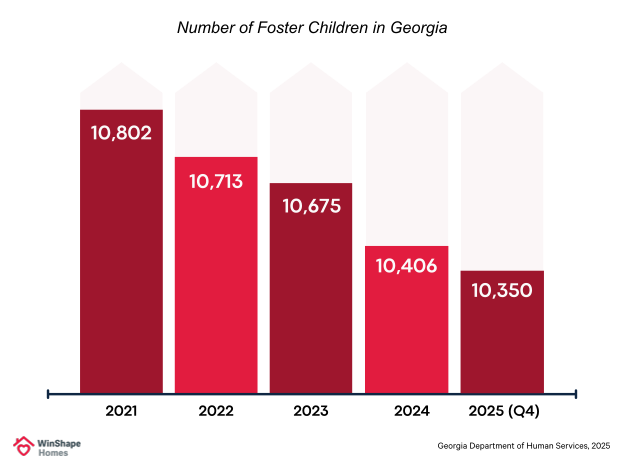
According to the Adoption and Foster Care Analysis and Reporting System (AFCARS), an estimated 328,947 children were in the United States child welfare system in the fourth quarter of 2024. ²
Georgia Foster Care Demographics
Gender
In Georgia foster care, the population is nearly evenly divided, with approximately 5,329 males and 5,021 females currently in care. ¹
Age
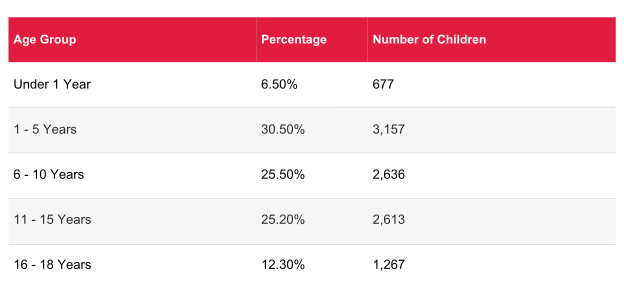
Children in Georgia’s foster care system span every stage of childhood, from infancy through late adolescence. A significant portion of children in care are very young, with 2,135 (20.6%) under the age of two.
At the same time, older youth represent a significant segment of the foster care population. There are 1,267 (12.3%) teenagers between the ages of 16 and 18 in Georgia foster care. ¹ The table below illustrates the age distribution of children in Georgia foster care as of Q4 2025:
How Long Do Children Stay in Foster Care?
Foster care is designed to be temporary, with healthy reunification as the primary goal. However, for many children in Georgia, time in care extends longer than anticipated.
In fact, 33.7% of children remain in foster care for more than two years, while 40.7% exit the foster care system within one year of entering. ¹ The length of time children spend in foster care underscores the importance of permanency planning, trauma-informed care, and consistent community support.
Why Children Enter Foster Care
Most children are removed from their homes due to serious safety concerns. In 2024, neglect was the leading reason for foster care removal in the United States (55%), followed by parental drug use (31%) and physical abuse (13%). ³
In Georgia, the scope of child maltreatment allegations in 2025 illustrates the challenges families face:
- Child Neglect: 84,627 reports
- Physical Abuse: 30,118 reports
- Emotional Abuse: 15,455 reports
- Sexual Abuse: 8,720 reports
Understanding why children enter foster care is critical for supporting both children and families. These reports highlight the dual need for protective removal when necessary and preventative services to help families resolve crises before removal becomes the only option.
Placement and Permanency Outcomes
When a child enters foster care, the ultimate goal is permanency in a safe, stable home. In Georgia, reunification with the birth families is the leading reason children exit foster care, accounting for 47% of all exits.
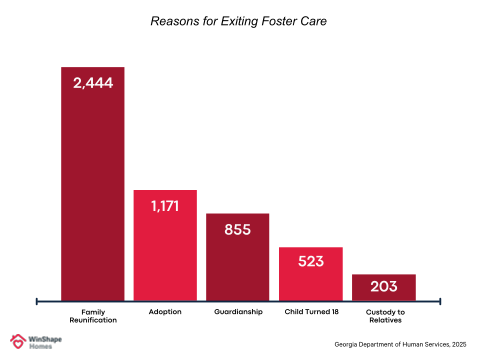
Outcomes such as placement with family members or relatives, guardianship, or adoption also vary based on the length of time a child has spent in the system. According to the Georgia Department of Human Services, 27% of children who entered care within the last 12 months have transitioned to permanent homes. For those in care longer, the rates of permanency shift: 39.5% for those in care 12–24 months, and 29% for those in care over 24 months. ¹
WinShape Homes’ Approach to Supporting Foster Care
At the heart of WinShape Homes’ mission is a simple belief: every child deserves a Christ-centered, loving home. As a licensed foster care agency in Georgia, WinShape Homes partners with families and churches to address the emotional, developmental, and spiritual needs of foster children.
What sets WinShape Homes apart is our holistic approach, which integrates dedicated in-house case managers, trauma-informed clinical care, and a supportive Christian community. Each foster family is personally guided through the licensing and placement process by staff who provide ongoing advocacy and support. Additionally, families have access to professional counselors trained in trauma-informed support.
Beyond clinical services, WinShape Homes emphasizes care communities through partnerships with local churches that surround foster families with volunteers who offer spiritual, emotional, and practical support. We exist in obedience to the biblical calling to “Defend the weak and the fatherless; uphold the cause of the poor and oppressed” (Psalm 82:3). Our mission is not just about placement; it is about restoration.
Work Cited:
- “Division of Family & Children Services – Child Welfare.” Georgia Department of Human Services, https://dhs.georgia.gov/division-family-children-services-child-welfare.
- S. Department of Health and Human Services, Administration for Children and Families, Children’s Bureau. “AFCARS Dashboard.” Tableau Public, https://tableau-public.acf.gov/views/afcars_dashboard_main_page/mainpage?%3Aembed=y&%3AisGuestRedirectFromVizportal=y.
- S. Department of Health and Human Services, Administration for Children and Families, Administration on Children, Youth and Families, Children’s Bureau. The AFCARS Dashboard (Print Version): Preliminary FFY1 2024 Estimates as of September 5, 2025 – No. 32. ACF, 2025, https://acf.gov/sites/default/files/documents/cb/2024-afcars-dashboard-printable.pdf.